
Why the 2026 Scottish Parliamentary Election Matters
Published: 5th March 2026
Why the 2026 Scottish Parliamentary Election Matters for Community Pharmacy and What CPS Is Doing About It.
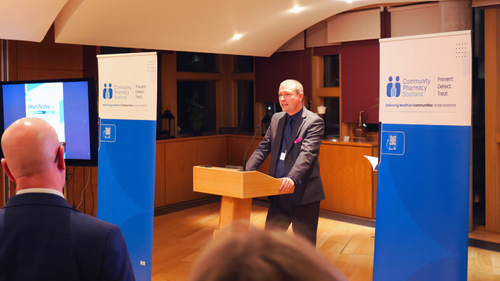
As we move towards the Scottish Parliamentary election on the 7th of May 2026, it’s impossible to ignore the scale of change facing our health and social care system. The political landscape is shifting, party priorities are evolving, and the pressures on NHS capacity continue to grow. For community pharmacy, this election is not just another date in the diary, it’s is a crucial moment for our network to show both the value we already deliver and the further potential we have to continue improving health outcomes for people across Scotland with the right investment.
A System Under Pressure and a Network Already Delivering
Community pharmacy teams have stepped up consistently over recent years. 90% of adults visited a pharmacy at least once last year, and over 1.9 million people accessed NHS Pharmacy First Scotland in the same period. These figures aren’t just statistics, they represent the trust people place in their local community pharmacy as the most accessible part of the NHS, and the essential role our teams play in prevention, early intervention, and treatment in the community.
The Scottish Government’s Programme for Government 2025/26 reinforced this direction of travel, committing to further expansion of NHS Pharmacy First Scotland and recognising community pharmacy as central to shifting care into community settings. This aligns closely with CPS’s long‑held view: if Scotland wants sustainable healthcare, it must invest in the parts of the system already delivering accessible care close to home.
What’s at Stake in This Election?
Ahead of the 2026 election, CPS has been clear about the opportunities (and risks) facing the sector. Our 2026 Manifesto sets out four priority areas we believe every political party must commit to if Scotland is to realise the full potential of its community pharmacy network:
1. Preventing Ill Health: We are calling for pharmacies to be commissioned to deliver in the preventative space in areas such as a national NHS weight‑loss service. These interventions allow pharmacy teams to support the Scottish Government priorities.
2. Detecting Conditions Earlier: CPS is advocating for community‑pharmacy‑led diabetes and cardiovascular screening programmes, enabling earlier identification of risks and smoother referral into NHS pathways working alongside our primary care partners.
3. Treating more patients in the community: Investment in NHS Pharmacy First Scotland must continue, and grow. This was a central plank of the Operational Improvement Plan released by Scottish Government last year. Prescribing also remains the single biggest transformational opportunity for primary care and must be invested in so that potential here can be maximised.
4. Building the infrastructure to support transformation: From digital connectivity and shared data to paperless dispensing, CPS is urging government to prioritise the infrastructure that enables community pharmacy to fully integrate with the wider NHS. Without fixing the digital foundation, we limit the potential of every service we want to deliver.
These are not abstract ambitions, they are practical, evidence‑based priorities rooted in the day‑to‑day realities of the pharmacy network’ work.
Funding: A Critical Election‑Year Issue
Alongside the service agenda sits a fundamental truth: the network cannot deliver more without sustainable funding.
Rising costs on many fronts mean that investment is required just to stand still and allow the network to continue to deliver under the financial mechanisms at our disposal. Further investment in new and expanded services as already articulated is vital.
What CPS Is Doing Ahead of the Election
In the run‑up to May 2026, CPS is taking a proactive, strategic approach:
Engaging cross‑party: We are meeting with MSPs across all parties to ensure our priorities are understood and embedded within party manifestos.
Highlighting system benefits: Our messaging is clear, investment in community pharmacy reduces pressure on GP, unscheduled care, and secondary services.
Championing community access: We are advocating for policy that recognises pharmacies as the first point of contact for care, particularly in rural and deprived communities.
Preparing for the next contract cycle: Negotiations on funding and service development for 2026/27 and beyond are ongoing, with a focus on sustainable growth and fair remuneration.
As the Scottish Government’s own guidance sets out, the pre‑election period begins on 26 March 2026, shaping how public bodies may operate. For CPS, this period is a crucial window for elevating the voice of the sector and ensuring community pharmacy is positioned as a central pillar of Scotland’s health strategy.
Looking Ahead
This election is an inflection point. Political decisions made in 2026 will determine whether Scotland fully harnesses the potential of its 1,200 community pharmacies, or loses momentum at a time when the NHS cannot afford to stand still.
CPS will continue to lead with clarity, evidence, and ambition on behalf of our members. Community pharmacy has already proven its value. Now, we need the political partnership and investment to match it.
If we get this right, we can deliver a healthier Scotland, together.























Frequently Asked Questions (FAQs)
-
Community pharmacies are facing rising costs while continuing to deliver essential NHS services, often paying out of their own pockets to keep afloat.
Sustainable funding is needed to allow the network to maintain existing services and support the development of new ones. Without appropriate investment, it becomes increasingly difficult for pharmacies to expand their role in supporting patient care.
-
Community pharmacies are one of the most accessible parts of the NHS. Around 90% of adults in Scotland visit a pharmacy each year, and more than 1.9 million people accessed NHS Pharmacy First Scotland last year.
Pharmacy teams provide advice, treatment, prevention services, and referrals. This helps patients get care quickly while reducing pressure on other parts of the health service.
-
Investment in community pharmacy can help:
Reduce pressure on GP services
Support urgent and unscheduled care
Improve early detection and prevention
Provide accessible care within local communities
By treating more patients in pharmacies, the NHS can focus hospital and specialist services on those who need them most.
-
Community Pharmacy Scotland is taking several steps in the run-up to the election, including:
Engaging with MSPs across political parties to ensure community pharmacy priorities are understood
Promoting the value of pharmacy services in improving patient access and reducing system pressures
Advocating for community pharmacy as a first point of care, particularly in rural and deprived communities
Continuing negotiations on future funding and services for the pharmacy contract
-
The pre-election period begins on 26 March 2026. During this time, public bodies must follow specific rules about announcements and public communications.
For CPS, it is still an important time to ensure the role of community pharmacy is understood by policymakers and that the sector’s priorities remain visible in discussions about the future of healthcare.
-
With the right investment and political support, community pharmacies could play an even greater role in Scotland’s healthcare system. This includes delivering more preventative services, identifying health conditions earlier, and treating more patients in the community.
By building on the strong foundations already in place, the community pharmacy network can help deliver better health outcomes for people across Scotland.
Read Our Manifesto

Today, I represented Community Pharmacy Scotland on BBC Scotland television and BBC Radio Scotland, discussing the availability of private flu vaccinations in community pharmacy and how people can prepare for winter