Yellow Card Scheme UK
Published: 6th August 2026
The Yellow Card Scheme in the UK is a system for collecting and monitoring information about suspected adverse drug reactions and safety concerns related to medicines and medical devices.
It allows anyone to report issues with medicines, vaccines, medical devices, and e-cigarettes. Established as the world's first spontaneous reporting scheme, it plays a crucial role in post-marketing drug safety surveillance in the UK, having collected over 1 million reports since its inception. For more information, you can visit the official Yellow Card website.
Frequently Asked Questions (FAQs)
-
The Yellow Card Scheme is the UK system for collecting and monitoring information about suspected adverse drug reactions and other safety concerns relating to medicines and medical devices. It supports post-marketing safety surveillance, helping to identify issues that may not have been apparent during clinical trials.
-
Reports can cover medicines, vaccines, medical devices and e-cigarettes. Anyone can submit one, including healthcare professionals, patients, carers and members of the public. You don't need to be certain that a medicine or device caused the problem, as suspicion alone is enough to warrant a report.
-
The scheme was the world's first spontaneous reporting system of its kind and has collected over a million reports since it began. Every report contributes to the wider safety picture, and patterns identified through the scheme can lead to changes in how medicines and devices are used or licensed. Further information is available on the official Yellow Card website at yellowcard.mhra.gov.uk.
This week’s MCR Ready Reckoner has been updated and is now available to download or you can view it via the App.
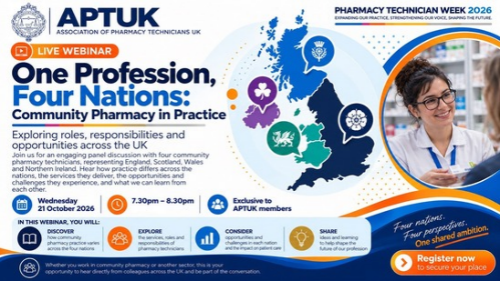
APTUK members can join a live webinar exploring community pharmacy technician roles across England, Scotland, Wales and Northern Ireland.
Our Chief Executive Matt Barclay and Policy & Public Relations Pharmacist Sarah Staddon are at #SNPConference in Aberdeen today
Scottish Government has officially launched a pilot for Video Remote Interpreting (VRI) in community pharmacy settings.
This year’s two-week Pharmacist campaign focuses on personal and workplace wellbeing and takes place Monday 2nd – Sunday 15th November.
CPS recently wrote to you all, inviting you to join some WhatsApp groups, and asking for details of the person who looks after the finance in your pharmacy/organisation.
Updated SDCEP guidance helps pharmacists and other healthcare professionals assess and manage patients presenting with acute dental problems.
Matt spent some time at the Pharmacy Show in Birmingham this week and, as ever, it was a useful opportunity to step away from the day-to-day and spend time talking to people from across community pharmacy.
Sarah Staddon is back at CPS!! Read her blog on Motherhood, Media Interviews and Everything In Between.
The Drug Tariff Part 11 discount clawback rate has been reset to 6.31%, effective from 1st September 2026.
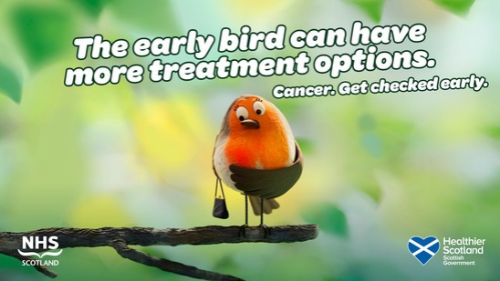
Community pharmacy teams are asked to display the Be the Early Bird poster and support the Scottish Government’s cancer awareness campaign.
Locum pharmacists in Scotland must meet new legal requirements under the Protecting Vulnerable Groups (PVG) Scheme.
Correction to Creon® SSP information: SSP061 is extended until 8th January 2027, while SSP060 expired on 2nd October 2026.
Today, I represented Community Pharmacy Scotland on BBC Scotland television and BBC Radio Scotland, discussing the availability of private flu vaccinations in community pharmacy and how people can prepare for winter
Check out our Monthly Planner: key dates, deadlines and events for community pharmacy in Scotland, all in one place and updated throughout the month.
Newly qualified Pharmacist Independent Prescribers are invited to share their experiences as part of a University of Strathclyde study.
The latest Scottish Pain Pharmacy Network newsletter highlights pain management developments, CPD opportunities and prescribing resources.
Our colleagues at the GPhC Inspectorate have asked us to pass on a friendly reminder as to the procedures required for Community Pharmacies to appropriately deal with Private Prescriptions for Controlled Drugs.
If you have completed your Community Pharmacy Independent Prescribing Training on the Community Pharmacy Scotland (CPS) / PSD Scotland (formerly NES) Programme, a Teach & Treat (T&T) session at one of the hubs is included as part of your programme.
Seriouse Shortage Protocols for selected Estradot® patches and Creon® capsules have been extended until 8th January 2027.
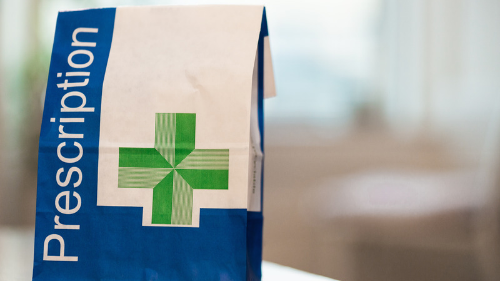
Practical guidance to help pharmacy teams avoid courier collection issues and ensure prescription bags are collected correctly.
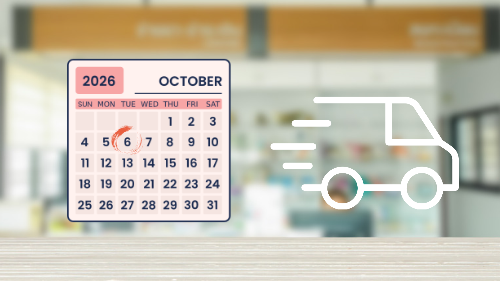
October 2026 Scottish Drug Tariff changes including Part 7 additions, deletions and updates to adjusted price arrangements.
The Sustainable Prescribing and Therapeutics Programme, are seeking examples of best practice in effective medicines use and approaches on reducing medicines waste within different healthcare settings
New drug death figures reinforce the need for a nationally commissioned substance use service and a stronger role for community pharmacy.
Updates to the NHS Pharmacy First Scotland Approved List from October 2026, including new formulary entries and eczema products.
Community Pharmacy Scotland (CPS) has agreed a funding settlement with the Scottish Government for 2026/27, providing increased funding certainty for Scotland's community pharmacy network.
Details of the 2026/27 community pharmacy funding package, including Global Sum, guaranteed funding and remuneration arrangements.
The Scottish Parliament recently debated the growing challenge of health misinformation, including its impact on public confidence in healthcare and vaccination programmes.
Important information on Post Registration Foundation Training and Community Pharmacist Independent Prescriber training opportunities.
Digital Communications Officer

CP Independent Prescribers and trainees should tell CPS about employment or other changes to keep their contact records up to date.