
CEO Insights: Public Service Reform - Opportunities & Risks
Published: 24th September 2026
The opportunities and risks for community pharmacy as Scotland considers major NHS structural reform This is the second of a two-part article. Part 1 was published last week.
In Part 1, I set out the case for reform and the potential benefits of reducing the number of health boards, including the prospect of greater consistency and faster national rollout of proven community pharmacy services. This second part turns to the risks, the questions that really matter, and the opportunity in front of community pharmacy.
The Risks We Must Not Ignore
However, structural reforms of this scale also carry significant risks. Healthcare history is littered with reorganisations that consumed enormous amounts of leadership time and energy yet delivered relatively little improvement to frontline care. The danger is that organisations become consumed by structures, reporting lines, governance frameworks and transition plans precisely when attention should be focused on improving services. For community pharmacy, there is a particular concern around local relationships.
One of the strengths of the current system is that community pharmacy leaders, NHS teams and local clinical leaders know one another and often work closely together to solve problems. Those relationships matter. They help services develop, barriers get removed and innovations spread. Any new structure must preserve the ability for local decision-making and local engagement.
A pharmacist in Shetland, Dumfries, Dundee and Glasgow does not operate in identical circumstances. Communities have different needs. Rurality matters. Deprivation matters. Geography matters. A larger organisation should not come at the expense of local responsiveness. Nor should reform simply become a mechanism for reducing costs. If the objective is solely to save money through management reduction, Scotland risks missing a much larger opportunity. True reform should be about shifting resource towards frontline prevention and community-based care.
The Real Question
The most important question is not whether Scotland should have fourteen health boards, two health boards or some number in between.
The more important question is this:
How will these reforms improve outcomes for patients?
Will they enable people to access care earlier?
Will they reduce avoidable hospital admissions?
Will they make it easier for health professionals to work together?
Will they help tackle health inequalities?
Will they support more care to be delivered within local communities?
If the answer to those questions is yes, then reform deserves support. If not, then changing organisational charts alone will achieve very little.
Community Pharmacy's Opportunity
For community pharmacy, this moment represents both a challenge and a significant opportunity. The Scottish Government's reform agenda is built around principles that align strongly with what community pharmacies already do: accessibility, prevention, early intervention and care close to home. The question is whether Scotland is prepared to fully utilise the network it already has. We do not need to build new community infrastructure. It already exists. Every day, skilled pharmacy teams are embedded within their communities, managing medicines, supporting long-term conditions, delivering preventative interventions and helping patients navigate the health system.
If public service reform means empowering those teams to do more with appropriate resource, then patients, communities and the NHS will all benefit. The success or failure of reform will not ultimately be judged by how many health boards Scotland has. It will be judged by whether people experience better care, closer to home, delivered by professionals they know and trust. That is where community pharmacy can play a pivotal role, and why we must ensure that structural reform is accompanied by genuine service reform. Because the future of healthcare is not simply about changing organisations. It is about changing outcomes.
This information was correct at the time of publication. Policy and guidance can change, so please check our latest news for the current position. For anything else, please contact enquiries@cps.scot





Frequently Asked Questions (FAQs)
-
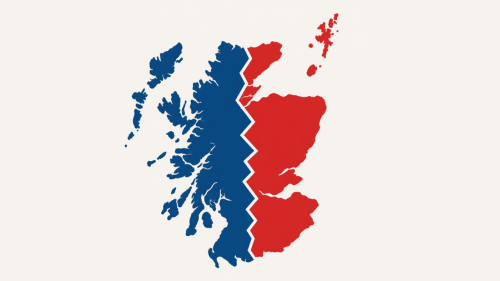
The Scottish Government has proposed reducing the number of territorial NHS Boards, potentially moving from fourteen boards to two strategic regional organisations covering the east and west of Scotland. This sits within a wider reform agenda focused on prevention, early intervention, greater integration and a reduction in bureaucracy.
-
Community pharmacy leaders, NHS teams and local clinical leaders currently know one another and often work closely together to solve problems. Those relationships help services develop, barriers get removed and innovations spread. A pharmacist in Shetland, Dumfries, Dundee and Glasgow does not operate in identical circumstances, so any new structure must preserve local decision-making and local engagement.
-
Not by how many health boards Scotland ends up with, but by whether reform improves outcomes for patients: earlier access to care, fewer avoidable hospital admissions, easier joint working between professionals, progress on health inequalities and more care delivered within local communities.

The opportunities and risks for community pharmacy as Scotland considers major NHS structural reform.